
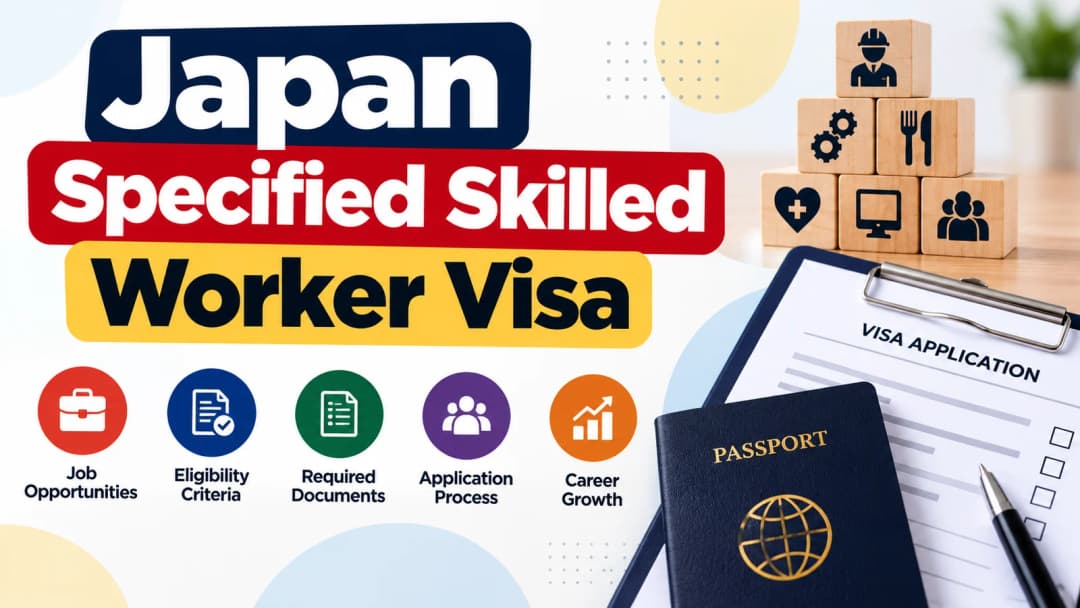
Japan Specified Skilled Worker Visa
Published: 2026-09-28 12:38:07
Quick answer: The Japan Specified Skilled Worker (SSW) visa lets foreign nationals work in Japanese industries that face labour shortages. To get SSW Type 1 (SSW i), you generally need to (1) pass a skills test for your industry, (2) pass JFT-Basic or JLPT N4 or higher, and (3) sign a contract with a Japanese employer. You can work up to 5 years in total and cannot bring your family. SSW Type 2 (SSW ii) needs a higher skill level, has no upper limit on stay, and allows family. Indian candidates can prepare now, because Japanese language skills are the first and most controllable step.
Information on this page was checked against the official SSW support website of Japan's Immigration Services Agency on 28 September 2026. Exam dates, eligible fields and fees can change, so always confirm on ssw.go.jp before you apply.
Prepare for JLPT N4 and JFT-Basic with TLS: The Japanese Language School
Visit Us 2/81-82, 2nd Floor, Lalita Park, Gali No - 2, Laxmi Nagar, New Delhi - 110092
Call Us 918700956038
Email Us: tls@teamlanguages.com
📍 Find TLS on Google: View our Google Business Profile
What Is the Japan Specified Skilled Worker (SSW) Visa?
Let's begin with the basics, so you understand exactly what this visa is and who it is meant for.
The Specified Skilled Worker (特定技能, Tokutei Ginou) status of residence was introduced in 2019 to help Japan fill jobs in sectors with serious labour shortages. It is a work visa, not a training visa. The official SSW website explains it simply: Technical Intern Training is a status for acquiring skills, while Specified Skilled Worker is a status for working.
Overview of the SSW Visa Program for Indian Workers
For Indian candidates, the SSW route is a structured and regulated way to work legally in Japan.
Foreign nationals who pass the required skills and Japanese language tests, and who sign a contract with a Japanese employer, can apply for this status. The employer (or a registered support organisation) must support you in daily life, and your employer applies for the Certificate of Eligibility (COE) on your behalf in most cases.
| Key Fact | Details |
| Visa name | Specified Skilled Worker (SSW), Type 1 and Type 2 |
| Type of visa | Work visa for designated labour-shortage industries |
| Introduced | 2019 |
| Who issues it | Immigration Services Agency of Japan (with COE) |
| Language test (Type 1) | JFT-Basic or JLPT N4 or higher (higher for some fields) |
| Skills test | Required for your specific field |
| Employer requirement | Employment contract with a registered employer |
Purpose and Benefits of the Specified Skilled Worker Visa
The visa exists for a clear purpose: to bring in workers who can start contributing immediately.
According to the official site, SSW(i) holders:
- Can work in Japan for a total of five years
- Receive the same salary as Japanese workers
- Receive Japanese language support and other support from the company
The programme also gives skilled workers a path to Type 2, which has no upper limit on stay and allows family to join.
Difference Between SSW Visa and Japan Student Visa
Many Indian aspirants confuse these two routes, so here is a simple comparison.
| Point | SSW Visa | Japan Student Visa |
| Main purpose | Work in a designated industry | Study (e.g., Japanese language school) |
| Basic language proof | JFT-Basic or JLPT N4 (higher for some fields) | Usually JLPT N5 or about 150 study hours |
| Skills test | Required | Not required |
| Employer needed | Yes, contract before visa | No (school sponsors) |
| Work rights | Full-time work in your field | Part-time up to 28 hours per week with permission |
| Maximum stay | 5 years (Type 1), unlimited (Type 2) | Course length (typically 6 months to 2 years) |
If you are thinking about studying first, read our guides on the Japan student visa Japanese language requirements and the Japan language school April 2027 intake.
Types of Japan Specified Skilled Worker Visas
The SSW visa has two levels, and understanding both helps you plan your long-term career.
Specified Skilled Worker Type 1 (SSW 1)
Type 1 is the starting point for most Indian candidates.
- Requires a skills test in your field and a Japanese language test
- Maximum 5 years of total stay
- Family cannot accompany you
- Support from your employer or a registered support organisation
- Work only in your designated field
Specified Skilled Worker Type 2 (SSW 2)
Type 2 is the advanced level for experienced, highly skilled workers.
- Requires passing an SSW(ii) skills test (work experience may be required)
- No upper limit on length of stay
- Family can join you
- Currently open in 11 fields (see below)
- Nursing care is not part of SSW(ii); care workers follow a separate "Nursing Care" status of residence
Key Differences Between SSW 1 and SSW 2
This table shows the differences at a glance.
| Feature | SSW Type 1 | SSW Type 2 |
| Skill level | Certain degree of expertise | More advanced skills |
| Total stay | Up to 5 years | No upper limit |
| Family | Not allowed | Allowed |
| Number of fields | 19 (as listed by ISA) | 11 |
| Language test | JFT-Basic / JLPT N4 | Not the same requirement (skills test focus) |
| Support plan | Required | Not required in the same way |
| Route to long-term residence | Move to Type 2 or other status | Can lead towards permanent residence |
Japan SSW Visa 2026: Eligible Industries and Job Opportunities
Now let's look at where you can actually work, because your industry choice decides your skills test.
According to the official SSW site (updated 27 March 2026), SSW(i) covers 19 fields. The site's steps page still mentions 16 fields in older text, so use the field list below and confirm on the official page.
SSW(i) fields: Nursing care; Building cleaning management; Construction; Industrial product manufacturing; Shipbuilding and ship machinery; Automobile repair and maintenance; Aviation; Accommodation; Automobile transportation; Railway; Agriculture; Fishery and aquaculture; Food and beverage manufacturing; Food service; Forestry; Wood industry; Resource recycling; Linen services; Logistics warehouse (the last three have detail pages still under construction).
Important 2026 note: The official site states that the Food Service industry is not accepting new SSW(i) applications at this time. Check the current status before planning for this field.
Nursing Care and Healthcare Support
Care work is one of the largest opportunities, especially in Japan's ageing society.
Jobs involve assisting people with physical disabilities and older adults. You need the nursing care skills test and, in addition to JLPT N4, the Nursing Care Japanese Language Evaluation Test.
Food and Beverage Manufacturing
This field covers preparing and processing food in factories.
Jobs include food preparation, processing and packing. Tests are held in Japan and in selected countries. Check the exam schedule for your country.
Food Service and Restaurant Industry
This field involves serving customers and preparing food in restaurants.
Work includes waiting on customers and bringing out food. As noted above, new applications are currently not being accepted in SSW(i), so watch for official updates.
Construction and Building Maintenance
Construction needs many skilled workers, and it has one of the clearest paths to Type 2.
Jobs involve constructing houses, buildings and other structures. The construction skills test has sittings in India on selected dates (see the exam section). Building cleaning management is a separate field.
Agriculture and Fisheries
These sectors need workers to grow crops, raise animals and manage fishing and aquaculture.
Agriculture involves growing and harvesting produce and raising livestock. Fishery and aquaculture involve catching and raising fish. Both fields also have SSW(ii) options.
Accommodation and Hospitality
Hotels want staff who can speak Japanese with guests, so language skills matter a lot.
Jobs include hotel reception and dealing with guests. India-based sittings for the accommodation skills test are listed on the official site.
Industrial Manufacturing and Other Eligible Sectors
Beyond these, many other industries offer work.
| Field | Type of Work |
| Industrial product manufacturing | Creating components and products |
| Shipbuilding and ship machinery | Building ships |
| Automobile repair and maintenance | Inspecting and maintaining vehicles |
| Aviation | Baggage handling, aircraft inspection and maintenance |
| Automobile transportation | Driving taxis, buses and trucks (higher Japanese level needed) |
| Railway | Maintaining trains and operating railways (higher Japanese level needed) |
| Forestry and wood industry | Tree planting, forest management, lumber processing |
| Resource recycling, linen services, logistics warehouse | Newer fields (details being published) |
How to Choose the Right SSW Industry
Choosing the wrong field can waste months, so use this simple checklist.
| Ask Yourself | Why It Matters |
| Do I have experience or interest in this work? | Skills tests test practical knowledge |
| Is the skills test held in India or nearby? | Saves travel and cost |
| What Japanese level does the field need? | N4 for most, N3 for driving and railway operation |
| Is the field open right now? | Some fields have caps or paused intake |
| Can I move to Type 2 later? | Long-term career and family plans |
Japan SSW Visa Eligibility Criteria for Indian Applicants in 2026
With the industries clear, let's check whether you qualify.
Minimum Age and Educational Requirements
The rules here are simple and are one reason this visa is popular.
- Age: you generally must be 18 or older at the time of application. Read our SSW visa age limit guide and SSW visa age limit and salary article.
- Education: the SSW pages of the official site do not list a degree requirement. Your qualification is proven mainly through the skills test and language test, though individual employers may set their own preferences.
Japanese Language Proficiency Requirements
Language is the first gate for SSW Type 1.
You must pass JFT-Basic or JLPT N4 or higher. Some fields need more (see the next section).
SSW Skill Test Requirements
Each field has its own skills test.
You must pass the skills test for the industry in which you want to work. Taking tests costs money, and some tests may require work experience.
Work Experience and Relevant Qualifications
Experience helps, but a training route exists.
For Type 1, there is no general work-experience rule listed on the official pages; the skills test checks your ability. For Type 2, work experience may be required to take the test.
Eligibility for Candidates Who Have Completed Technical Intern Training
If you have finished Technical Intern Training, you may skip the tests.
According to the official site, you generally do not need to pass the tests if you have satisfactorily completed Technical Intern Training (ii). However, to work in a different field, you must pass the skills test for that new field.
Eligibility summary:
| Requirement | SSW Type 1 |
| Age | 18 or above |
| Skills test | Required (unless TITP (ii) completed in related field) |
| Japanese test | JFT-Basic or JLPT N4 (N3 for some fields) |
| Employer | Contract with a registered employer |
| Passport and immigration record | Valid, clean |
Japanese Language Requirements for Japan SSW Visa 2026
Since language is the part you can start preparing today, let's look at it in detail.
Is JLPT N4 Mandatory for the SSW Visa?
Short answer: you need either JLPT N4 or JFT-Basic.
For SSW(i), the official site requires passing either the JFT-Basic or JLPT N4 or higher (plus the skills test). So JLPT N4 is not the only route, but it is the standard one. Learn more in our guide on JLPT N4 preparation.
JLPT N4 vs JFT-Basic: Which Japanese Language Test Is Accepted?
Both are accepted, so the best choice depends on timing and comfort.
| Point | JLPT N4 | JFT-Basic |
| Accepted for SSW(i) | Yes | Yes |
| Frequency in India | Twice a year (July and December) | Multiple sittings (India dates listed on ssw.go.jp) |
| Format | Paper-based | Computer-based |
| Good for | Long-term Japanese career, studies, jobs | Fast SSW eligibility |
| Extra value | Widely recognised for all visas and jobs | Mainly used for SSW and work-related needs |
Read: JLPT vs JFT-Basic, JFT-Basic exam guide and JFT-Basic 2026 for SSW Japan.
Japanese Language Requirements for Nursing Care
Care workers deal with patients and colleagues all day, so the language bar is higher.
You need JLPT N4 (or the general language route) plus the Nursing Care Japanese Language Evaluation Test, along with the nursing care skills test.
Japanese Language Proficiency for Automobile Transportation and Railway Jobs
Safety-related jobs demand stronger Japanese.
To work as a taxi or bus driver (automobile transportation) or in railway train operation, the official site requires JLPT N3 or higher.
| Field | Minimum Japanese Requirement (SSW i) |
| Most fields | JFT-Basic or JLPT N4 or higher |
| Nursing care | JLPT N4 Nursing Care Japanese Language Evaluation Test |
| Automobile transportation (taxi/bus) | JLPT N3 or higher |
| Railway (train operation) | JLPT N3 or higher |
How to Prepare for JLPT N4 and JFT-Basic in India
A simple 4-step plan works for most beginners.
- Learn the basics. Master Hiragana, Katakana and basic Kanji.
- Finish N5 level. Join a Basic Japanese N5 course.
- Move to N4. Join the Intermediate Japanese N4 course.
- Practise tests and speaking. Use JLPT practice tests and Kaiwa speaking practice.
Japan SSW Skill Test 2026: Exam Pattern, Syllabus and Preparation
After language, the second gate is your industry skills test.
What Is the SSW Skill Assessment Test?
It is a field-specific exam that checks whether you can do the job.
Each industry has its own test, run by industry bodies or testing organisations. Topics usually cover job knowledge, safety, hygiene and basic workplace practice. Some tests are computer-based at Prometric centres; others are held by industry associations. Read more in our SSW exam 2026 guide.
Industry-Specific SSW Exam Requirements
Requirements differ, so always check the test page for your field.
| Field | Test Format / Notes (from official listings) |
| Nursing care | Skills test Japanese care language test (Prometric) |
| Construction | Industry test (JAC); India sittings listed |
| Accommodation | Industry test (Prometric); India sittings listed |
| Agriculture | Industry test (Prometric); India sittings listed |
| Building cleaning management | Industry test; India listed for September and October 2026 |
| Automobile transportation | Industry test; India listed for September and October 2026 |
| Other fields | Check the relevant industry site |
SSW Exam Dates and Test Centres in India
The official site lists India-based sittings, but schedules are updated often.
As of the official listing (updated 17 September 2026):
| Test | India Sittings Listed |
| Japanese language test (JFT-Basic) | 5-6 and 10-12 September 2026 |
| Nursing care skills test | Sep 5-6, 10-12; Oct 3, 10-11, 23-24, 31 |
| Construction skills test | Sep 5-6, 10-12; Oct 3, 10-11, 15, 23-24, 31 |
| Accommodation skills test | Sep 5-6, 10-12 |
| Agriculture skills test | Sep 5-6, 10-12 |
| Building cleaning management | Throughout Sep and Oct 2026 |
| Automobile transportation | Throughout Sep and Oct 2026 |
JLPT is held twice a year (July and December). See JLPT December 2026 and JLPT exam centres in India.
SSW Skill Test Registration Process
Registration is done directly with the test organiser, not through the ISA site.
- Choose your field on the official test page.
- Open the organiser link for that field (for example, Prometric).
- Create an account, choose a date and test centre, and pay the fee.
- Keep your confirmation and, after the result, your certificate.
Tips to Prepare for the Japanese Language and Skill Exams
Small habits make a big difference.
- Study for the language test and skills test together.
- Learn industry vocabulary (safety, tools, workplace words) from day one.
- Practise listening with everyday and workplace audio.
- Take mock tests under time limits.
- Register early, since seats can fill up.
Prepare for JLPT N4 with Team Language Services
Visit Us 2/81-82, 2nd Floor, Lalita Park, Gali No - 2, Laxmi Nagar, New Delhi - 110092
Call Us 918700956038
Email Us: tls@teamlanguages.com
📍 See TLS on Google: Google Business Profile and reviews
Japan SSW Visa 2026: Required Documents for Indian Applicants
Once you pass your tests and get a job offer, the next task is documentation.
The official site has a dedicated Required Documents page, and exact lists vary by field and situation. The following is a practical overview. Also see our SSW visa documents checklist for Indians.
Passport and Identity Documents
Identity documents must be consistent everywhere.
- Valid passport
- Passport-size photographs
- Application form for the Certificate of Eligibility (often filed by your employer)
Educational Certificates and Employment Records
These support your background, especially if the employer or field asks for them.
- Education certificates, if requested by the employer
- Work experience letters (useful for skills and Type 2 paths)
- Previous residence card and Technical Intern Training certificates, if transitioning from TITP
Japanese Language and Skill Test Certificates
These are the most important proofs for Type 1.
- JLPT N4 or JFT-Basic result
- Skills test pass certificate for your field
- Nursing Care Japanese Language Evaluation Test result (for care work)
- JLPT N3 certificate (for taxi/bus driving and railway train operation)
Medical Examination and Health Documents
A health certificate is part of the file.
A medical or health certificate in the format required for your case is normally needed. Your employer or sending organisation will give the exact form.
Employment Contract and Company Documents
Your contract is the centre of the application.
- Employment contract with a registered specified-skills employer
- Written notice of employment conditions
- Support plan from the registered support organisation (Type 1)
- Company registration and other papers (usually handled by the employer)
Financial and Immigration-Related Documents
Most financial documents are the employer's responsibility.
The employer typically provides company financial and tax documents. You should keep your identity and immigration records clear and accurate.
| Document Group | Who Usually Provides It |
| Passport, photos | You |
| Language and skills certificates | You |
| Health certificate | You (format from employer/agency) |
| Employment contract | Employer |
| Support plan | Employer / support organisation |
| Company documents | Employer |
Japan SSW Visa Application Process for Indians: Step-by-Step Guide
Here is the full journey from idea to landing in Japan.
For extra reading, see our SSW visa from India guide and how to apply for a SSW visa in Japan from India.
Step 1: Choose an Eligible SSW Industry
Pick a field that matches your skills, interests and open status.
Compare fields, Japanese level required, exam availability in India and career path (Type 2 options).
Step 2: Learn Japanese and Prepare for the Required Exams
Start language learning early, because it takes the longest.
Join structured classes for N5 and N4 and prepare for JFT-Basic or JLPT.
Step 3: Pass the Japanese Language and Industry Skill Tests
Both tests are compulsory for Type 1 (except TITP (ii) completers).
Book your language test and your skills test and keep the certificates safe.
Step 4: Find a Japanese Employer and Secure a Job Offer
The official site says that if your country uses sending organisations, you should use a licensed one.
Look for job openings through sending organisations, company hiring sites and job fairs. Read how to find SSW jobs below.
Step 5: Sign the Employment Contract
Read every clause carefully before signing.
The company must give you a written notice of employment conditions. Check job details, work location, salary and support.
Step 6: Apply for the Certificate of Eligibility (COE)
Your employer usually applies to the Regional Immigration Services Bureau.
The official site says the COE takes one to three months, so apply well in advance.
Step 7: Apply for the Japan Work Visa
After the COE, you apply for the visa at the Japanese embassy or consulate.
Carry your COE, passport and required documents. Check the website of the mission in your country for details and appointment rules.
Step 8: Complete Pre-Departure Preparations and Travel to Japan
The last step is getting ready to fly.
Carry your passport, COE and visa. Someone from your company or registered support organisation will pick you up on arrival. Register your address within 14 days of arrival.
| Step | Action | Who Does It |
| 1 | Choose industry | You |
| 2 | Learn Japanese and prepare | You |
| 3 | Pass language and skills tests | You |
| 4 | Find employer | You and sending organisation |
| 5 | Sign contract | You and employer |
| 6 | COE application | Usually employer |
| 7 | Visa at embassy | You |
| 8 | Travel to Japan | You |
Japan SSW Visa 2026: Salary and Job Opportunities
Salary is a top question for every Indian candidate, so let's cover it realistically.
Average Salary Expectations for SSW Workers in Japan
The key rule is set by law: SSW workers must be paid the same as Japanese workers.
The official SSW site states that you receive the same salary as Japanese workers. Actual pay depends on your industry, region, working hours and employer. As a general planning estimate (not an official figure), many SSW workers see a basic monthly gross of roughly ¥170,000 to ¥250,000, with overtime and allowances on top. Always check the amount in your written contract.
Salary Comparison Across Different SSW Industries
Pay differs, so here is a general comparison of what affects income.
| Industry | What Usually Affects Pay (General Guide) |
| Nursing care | Night shift allowances, experience, facility type |
| Construction | Overtime, skill level, project location |
| Food and beverage manufacturing | Shifts, overtime, factory location |
| Accommodation | Shift work, tips are uncommon, location |
| Agriculture / fisheries | Season, overtime rules, housing provided |
| Driving and railway | Higher Japanese level, licence, safety training |
These are general factors, not official salary figures.
Working Hours, Overtime and Employment Benefits
Working conditions must follow Japanese labour law.
Standard full-time work is typically around 40 hours per week, and overtime must be paid at legal rates. You are entitled to social insurance and paid leave under Japanese law. Read the Japan public pension pamphlet on the official site.
Cost of Living and Potential Monthly Savings in Japan
Savings depend on your lifestyle and where you live.
| Item | Approximate Monthly Cost (General Estimate) |
| Rent (shared or company housing) | ¥25,000 to ¥60,000 |
| Food | ¥25,000 to ¥40,000 |
| Utilities, phone, transport | ¥15,000 to ¥25,000 |
| Insurance and tax | Varies by salary |
| Possible savings | Often ¥30,000 to ¥80,000 for careful workers |
These are rough estimates for planning only.
Employee Rights and Workplace Support
You are protected, and help is available if something goes wrong.
The official site lists support such as the Immigration Information Center (Tel: 0570-013904; from overseas or VoIP: 03-5796-7112; Monday to Friday, 8:30 a.m. to 5:15 p.m.), the Foreign Residents Support Center (FRESC) and a daily-life support portal in many languages. If you change jobs within your field, you must change your status of residence before starting at the new company. Changing to a different field is not permitted.
Japan SSW Visa Fees and Processing Time in 2026
Let's now look at costs and timing, so you can plan your budget.
Japanese Language and Skill Examination Fees
Exam fees depend on the test and the organiser.
| Item | Approximate Amount (Reported) |
| Skills examination | about ¥7,000 to ¥10,000 |
| Japanese language test (JLPT N4 / JFT-Basic) | about ¥6,500 (varies by test and country) |
Fees in India are charged in local currency and can differ. Check the organiser's site.
Visa Application and Documentation Costs
Government fees are small, but agent or sending-organisation fees can be large.
| Item | Approximate Amount |
| Certificate of Eligibility application | Free |
| Visa issuance fee (single entry) | ¥15,000 (reported, effective 1 July 2026; nationality rules may vary) |
| Document translation, medicals, photos | Varies |
| Sending organisation fees | Varies; check that the organisation is licensed and fees are reasonable |
Certificate of Eligibility Processing Time
The official site says one to three months, and recent averages give a clearer picture.
| Source | COE Processing |
| Official ISA guidance | 1 to 3 months |
| July 2026 average (Type 1, from overseas) | about 64 days |
| July 2026 average (Type 2, from overseas) | about 58 days |
| Embassy visa after COE | Usually a few working days to about two weeks |
Estimated Total Cost of Applying from India
Here is a simple planning table.
| Cost Head | Estimated Range (General) |
| Language classes | Depends on course and level |
| Exams (language skills) | Small to moderate |
| Visa fee, documents, medicals | Moderate |
| Flight to Japan | Moderate |
| Sending organisation or agent fees | Can be high; verify legality and fees |
Factors That May Delay Your SSW Visa Application
Most delays are avoidable.
| Delay Factor | How to Avoid It |
| Missing or late certificates | Pass tests early and keep copies |
| Employer document errors | Confirm the company is registered and prepared |
| Wrong field or job details | Keep your contract and field aligned |
| Incomplete forms | Double-check every form |
| Seasonal or field-specific caps | Check official notices, especially for food service |
How to Find SSW Jobs in Japan from India
Finding a job is often the hardest step, so let's break it down.
Finding Japanese Employers Hiring Foreign Workers
The official site suggests two main routes.
- Through a licensed sending organisation (if your country requires it). Check the country-specific information on the ISA site.
- On your own through corporate hiring websites and job fairs for foreign nationals, including events hosted by the Immigration Services Agency.
How to Prepare a Japanese Resume (Rirekisho)
A neat rirekisho shows respect and attention to detail.
Use the standard format with photo, education, work history and reasons for applying. See our guide on how to write a Japanese resume.
Japanese Job Interviews and Workplace Communication
Interviews test both communication and attitude.
Prepare a clear self-introduction, common questions and polite Japanese. Read how to prepare for a job interview in Japanese and self-introduction in Japanese.
Employment Contracts and Important Terms to Check
Read before you sign.
| Check This | Why It Matters |
| Job description and field | Must match your SSW field |
| Salary, overtime, allowances | Must be equal to Japanese workers |
| Work location and hours | Affects living costs and life |
| Housing and support | Employer or support organisation duties |
| Contract length and termination terms | Avoid hidden penalties |
Understanding the Role of Recruitment and Sending Agencies
Agencies can help, but you must stay careful.
Use only licensed organisations, ask for written fee details and avoid anyone who asks for unusually large payments or promises guaranteed jobs. The official site also recommends reading the JP-MIRAI Portal article on what companies must not do. Note: TLS provides Japanese language training and does not act as a recruitment agency or guarantee job placement.
Benefits of the Japan Specified Skilled Worker Visa
Why do so many candidates choose this route? Here are the main advantages.
Employment Opportunities in Japan's Skilled Industries
The visa opens legal, regulated work in growing sectors.
Care, construction, manufacturing, hospitality and agriculture all face labour shortages, which means steady demand.
Competitive Employment Conditions and Workplace Benefits
Equal pay and support are built into the system.
You receive the same pay as Japanese workers, plus employer or support-organisation help with daily life.
Opportunities for Skill Development and Career Growth
You can grow your skills and your status.
Working experience helps you prepare for the SSW(ii) test, and better Japanese (N3, N2) opens doors to higher roles. See career after learning Japanese.
Family Accompaniment Rules for SSW Type 1 and Type 2
Family rules are one of the biggest differences.
| Type | Family Can Join? |
| SSW Type 1 | No |
| SSW Type 2 | Yes (spouse and children) |
Long-Term Career and Residency Considerations
Think beyond five years.
Type 1 is capped at 5 years in total. Moving to Type 2, or to another status if you qualify, is the way to build a longer stay. Learn more in work in Japan from India and Japan visa for Indians.
Why Learn Japanese Before Applying for the Japan SSW Visa?
Even if the minimum is N4, stronger Japanese changes everything.
Importance of Japanese Language Skills in the Workplace
Safety, teamwork and promotion all depend on communication.
Understanding instructions, safety rules and colleagues keeps you safe and makes you a valued employee.
How JLPT N4 and JFT-Basic Help Meet SSW Requirements
They are your official proof of basic Japanese.
Either test satisfies the SSW(i) language rule (with higher levels for some fields). JLPT also stays useful for future jobs and further studies.
Improving Japanese Speaking and Listening Skills
Tests check knowledge, but real jobs need speaking.
Practise conversation daily. Use conversation classes and read how to improve Japanese speaking skills fast.
Preparing for Japanese Job Interviews and Workplace Culture
Culture matters as much as grammar.
Learn polite forms and workplace etiquette. Our guides on Japanese honorifics and keigo help.
Why Choose Team Language Services for Japanese Language Training?
TLS: The Japanese Language School (Team Language Services) is a Japanese language institute in Laxmi Nagar, New Delhi. We focus on language training and exam preparation. Visa, COE and job offers are handled by Japanese immigration, employers and licensed organisations. For general information on documents and procedures, see our Japan visa assistance information and SSW Japan visa guide.
Japanese Language Courses for Beginner to Advanced Learners
Learn step by step at your own level.
Courses from N5 to N4, N3, N2 and N1. See all courses.
JLPT N5 and N4 Exam Preparation
Targeted preparation for the levels SSW candidates need most.
Study plans, grammar, vocabulary, kanji, listening and mock tests. Read JLPT N5 course, JLPT N4 complete guide and JLPT preparation course in Delhi.
Japanese Speaking, Listening and Workplace Communication
Language for real workplaces, not just exams.
Practise greetings, instructions, reporting and everyday workplace phrases, plus speaking sessions through Kaiwa.
Structured Japanese Language Training for SSW Aspirants
A clear plan saves time.
| Stage | Focus | Suggested TLS Path |
| 1 | Hiragana, Katakana, basic words | N5 course |
| 2 | Grammar, kanji, listening | N4 course |
| 3 | Speaking and workplace communication | Conversation classes |
| 4 | Mock tests and exam strategy | JLPT / JFT-Basic practice |
| 5 | Higher level (optional) | N3 course |
Guidance for Preparing for Japanese Language Proficiency Exams
Know the test before test day.
We guide you on test formats, registration timing and practice. See JFT-Basic 2026, JLPT registration and our free Japanese quiz. Classes are available online and offline in Delhi. Check course fees.
Visit Us 2/81-82, 2nd Floor, Lalita Park, Gali No - 2, Laxmi Nagar, New Delhi - 110092
Call Us 918700956038
Email Us: tls@teamlanguages.com
📍 Reach us on Google: TLS on Google Business Profile
Frequently Asked Questions About the Japan SSW Visa 2026
Here are direct answers to the most common questions from Indian candidates.
What is the Japan SSW visa, and who can apply?
It is a work visa for foreign nationals with certain skills in designated industries facing labour shortages. Applicants generally must pass a skills test and a Japanese test (for Type 1) and have a contract with a Japanese employer.
Can Indian citizens apply for the Japan SSW visa in 2026?
Yes. The official site lists India among the countries with SSW test sittings, and Indian nationals can apply if they meet the requirements. Always check the country-specific information on the official site for procedures such as sending organisations.
Is JLPT N4 compulsory for the Japan SSW visa?
For SSW(i), you need JFT-Basic or JLPT N4 or higher. Some fields need more: JLPT N3 or higher for taxi/bus driving and railway train operation, and the Nursing Care Japanese Language Evaluation Test for care work (in addition to N4).
Can I apply for the SSW visa without a degree?
The official SSW pages do not list a degree as a general requirement. You mainly need the skills test, language test and employer contract. Some employers may prefer certain qualifications.
What is the age limit for the Japan SSW visa?
Generally 18 years or older. See our SSW visa age limit guide and confirm with the official site.
How much salary can an Indian worker earn in Japan under SSW?
Officially, SSW workers must receive the same pay as Japanese workers. As a rough planning estimate, basic monthly pay is often around ¥170,000 to ¥250,000 before overtime, but your contract decides the real amount.
How long does it take to get a Japan SSW visa?
The COE usually takes 1 to 3 months (recent averages are around 58 to 64 days), and the embassy visa step usually takes a few working days after that. Including exams and job search, the whole journey often takes several months.
Can I change jobs after receiving an SSW visa?
Yes, but only within the same field, and you must change your status of residence before starting the new job. Working before the change is illegal. Changing to a different field is not permitted under the same status.
Can my family accompany me to Japan on an SSW visa?
Not with Type 1. With Type 2, your spouse and children can apply for a dependent visa.
Can I apply for SSW Type 2 after completing SSW Type 1?
Yes, if your field offers Type 2 and you pass the higher-level SSW(ii) skills test (work experience may be required). Nursing care is not covered by SSW(ii); care workers follow a separate status of residence.
Where can I prepare for JLPT N4 or JFT-Basic in India?
You can prepare with structured Japanese language training at TLS: The Japanese Language School in Laxmi Nagar, New Delhi, through offline and online classes. See N4 course and JFT-Basic guide.
Is the food service field open for SSW in 2026?
According to the official SSW site, the Food Service industry is not accepting new SSW(i) applications at this time. Please check for updates before planning.
Start Your Japanese Language Learning Journey with Team Language Services
You now know the requirements, tests and steps. The best time to start learning is today.
At TLS: The Japanese Language School, we help you build the Japanese ability that SSW candidates need: N5 and N4 preparation, JFT-Basic guidance, speaking, listening, reading and workplace communication. Our aim is simple: help you learn well, so you can meet the language requirement with confidence.
Prepare for JLPT N4 with Team Language Services. Book a counselling session and get a personal study plan.
Take the Next Step
- Book a free counselling and demo class
- Explore Japanese courses
- Contact TLS
- Read the SSW visa requirements guide
- Learn about the Specified Skilled Worker system
- Rate and find TLS on Google
Visit Us
TLS: The Japanese Language School (Team Language Services)
Visit Us 2/81-82, 2nd Floor, Lalita Park, Gali No - 2, Laxmi Nagar, New Delhi - 110092
Call Us 918700956038
Email Us: tls@teamlanguages.com
📍 Google Business Profile: Find TLS on Google
Official Sources Used
- Support Website for the Specified Skilled Worker Program (ssw.go.jp)
- What Is the "Specified Skilled Worker" Status of Residence?
- Steps to Working in Japan
- Information on Tests Related to the SSW System
- Required Documents
- Japan-Visa.com: Specified Skilled Worker Visa guide (for fee and COE processing reference figures)