

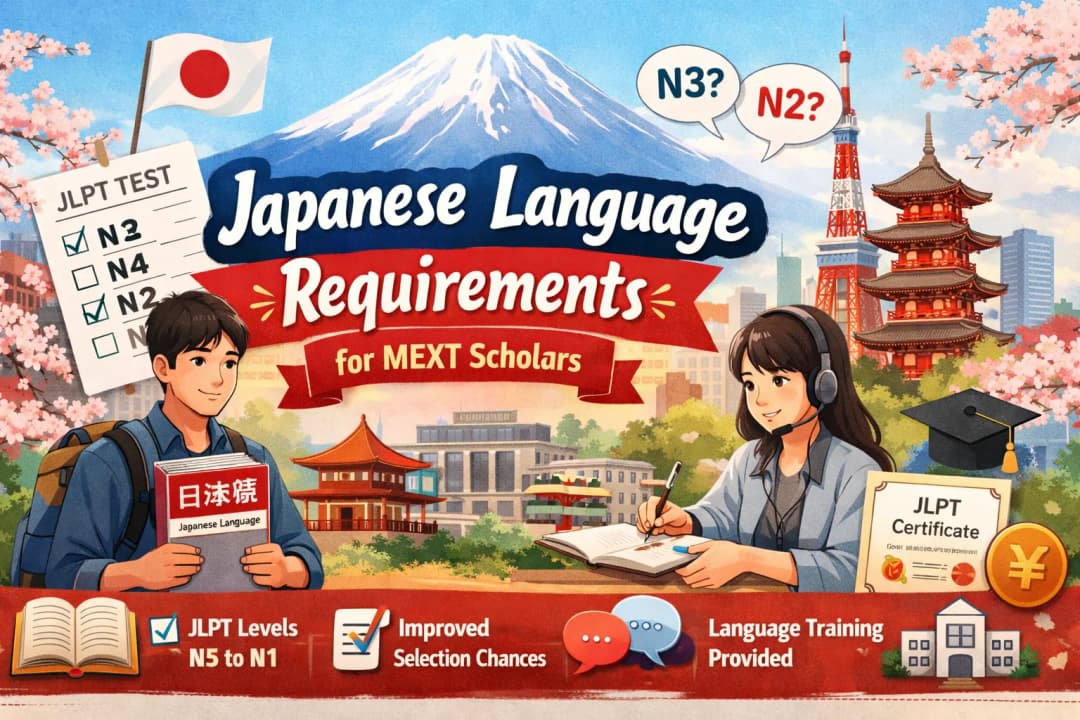
Japanese Language Requirements for MEXT Scholars
Published: 2026-02-26 06:16:54
The MEXT (Ministry of Education, Culture, Sports, Science and Technology) Scholarship is one of the most prestigious fully-funded scholarship programs offered by the Government of Japan to international students. It supports undergraduate, postgraduate, research, teacher training, and specialized training college students from around the world who wish to pursue their education in Japan.
According to the official Study in Japan portal (https://www.studyinjapan.go.jp/en/planning/scholarships/mext-scholarships/), the MEXT Scholarship typically covers:
- Full tuition fees
- Monthly stipend
- Round-trip airfare
- Preparatory Japanese language training (if required)
While some programs allow students to study in English-medium universities, having Japanese language proficiency significantly enhances your academic experience, daily communication, and career opportunities in Japan.
Discover all the details about the MEXT Scholarship
Visit Us Today!
Come see us at 2/81-82, 2nd Floor, Lalita Park, Gali No - 2, Laxmi Nagar, New Delhi - 110092 and explore our courses in person!
Japanese Language Proficiency Levels Explained
If you're planning to apply for the MEXT Scholarship, understanding Japanese language proficiency levels is more important than most students initially think. Your ability to read, write, listen, and communicate in Japanese is measured through the JLPT (Japanese Language Proficiency Test) the globally recognized benchmark used by universities across Japan.
Here’s how the JLPT levels are structured:
- N5 – Beginner Level: Ability to understand basic phrases, simple sentences, and everyday expressions used in daily conversations.
- N4 – Elementary Level: Can manage routine interactions and understand slow, simple spoken Japanese in familiar contexts.
- N3 – Intermediate Level: Able to grasp everyday conversations at near-natural speed and read basic written materials like emails or notices.
- N2 – Upper Intermediate (Professional Level): Understands news reports, academic discussions, and workplace communication with relative ease.
- N1 – Advanced Level: Demonstrates near-native fluency, including comprehension of complex texts, abstract discussions, and formal language.
For most MEXT scholars, reaching at least JLPT N3 or N2 is strongly recommended especially if you’re applying for programs taught in Japanese. At these levels, you’ll not only manage academic coursework more comfortably but also adapt faster to campus life, research work, and professional opportunities in Japan.
Read about the MEXT Scholarship application process
Why Japanese Language Skills are Important for MEXT Scholars
Even if you’re enrolled in an English-taught program under the MEXT Scholarship, relying only on English in Japan can quickly become limiting. Japanese language skills act as your bridge not just to academic success, but to a smoother, more confident life outside the classroom.
With a working knowledge of Japanese, you can:
- Communicate effectively with professors and classmates during lectures, group projects, and academic discussions
- Understand research papers, lab instructions, and campus notices that may not always be available in English
- Handle everyday tasks with ease, from opening a bank account to ordering food or asking for directions
- Apply for internships and part-time jobs, many of which require basic conversational Japanese
- Engage more deeply in cultural exchanges, student clubs, and university events
MEXT scholars who arrive without foundational Japanese often face challenges adjusting to classroom dynamics and managing routine activities like transportation, documentation, or shopping. On the other hand, even an intermediate level of proficiency can dramatically boost your independence, social integration, and overall academic experience in Japan.
Learn all about MEXT Scholarships
Call Now for a Free Consultation!
Dial 91 87009 56038 and get expert guidance for your language learning journey.
Ways to Improve Your Japanese Language Skills
Getting better at Japanese isn’t about cramming vocabulary the night before an exam it’s about building habits that combine structured learning with real-world exposure. The more you interact with the language in everyday situations, the faster your confidence and fluency grow.
Here are some effective ways to level up your Japanese:
- Join structured classroom training to build a strong foundation in grammar, kanji, and sentence formation
- Practice speaking with native speakers through conversation clubs or language exchange sessions
- Watch Japanese anime, dramas, or news with subtitles to improve listening and contextual understanding
- Use language-learning apps for daily vocabulary drills and revision on the go
- Read manga, blogs, or simple newspapers to enhance reading speed and comprehension
If you're serious about preparing for the MEXT Scholarship, enrolling in an offline training program can make a huge difference. Institutes in Delhi NCR such as TLS – The Japanese Language School offer JLPT-focused coaching, speaking practice, and exam-oriented preparation designed specifically for students aiming to study in Japan.
MEXT Scholarship eligibility and requirements
Japanese Language Proficiency Tests for MEXT Applicants
If you're applying for the MEXT Scholarship, proving your Japanese language ability can significantly strengthen your application. Universities in Japan often look for standardized test scores to assess whether international students can manage academic coursework and daily communication in a Japanese-speaking environment.
Some of the most widely accepted Japanese language proficiency exams include:
- JLPT (Japanese Language Proficiency Test): The most globally recognized certification for academic admissions and scholarship evaluations
- NAT Test: A practical alternative that follows a similar format to the JLPT and is conducted more frequently
- TOPJ (Test of Practical Japanese): Designed to assess real-world communication skills in academic and professional settings
While all three exams are valuable, the JLPT remains the preferred benchmark for most Japanese universities and is often considered during MEXT scholarship screening. A good JLPT score not only reflects your language readiness but also shows your commitment to adapting to life and study in Japan.
Email Us Anytime!
Reach out at tls@teamlanguages.com for queries, course details, or personalized guidance.
Preparing for Japanese Language Assessments as a MEXT Scholar
If you're aiming to qualify for the MEXT Scholarship, preparing for a Japanese language assessment like the JLPT should be a key part of your study plan. A strong score not only validates your language proficiency but also improves your chances of academic success and smooth integration into Japanese university life.
To prepare effectively for Japanese language proficiency tests:
- Strengthen your grammar fundamentals to understand sentence structures used in academic settings
- Practice kanji daily to improve reading speed and written comprehension
- Enhance listening skills through Japanese podcasts, news, or audio lessons
- Attempt regular mock tests to become familiar with exam patterns and time management
- Enroll in JLPT preparation classes for guided learning and structured revision
Professional coaching institutes offering JLPT-focused training can help you align your preparation with MEXT scholarship requirements. From understanding the test format to improving speaking and comprehension skills, expert guidance can make your preparation more targeted, efficient, and result-oriented.
Ace your MEXT Scholarship interview with expert tips
Study Tips for Japanese Language Beginners
Starting your Japanese language journey from zero can feel overwhelming but the right approach makes all the difference, especially if you're preparing for opportunities like the MEXT Scholarship. Instead of trying to learn everything at once, focus on building a strong foundation step by step.
Here’s how beginners can make steady progress:
- Master Hiragana and Katakana first, as they form the base of all Japanese reading and writing
- Build your vocabulary gradually by learning commonly used words and daily expressions
- Use spaced repetition techniques (SRS) to retain new words and kanji more effectively
- Practice basic sentence formation to understand how Japanese grammar works in real conversations
- Speak every day—even if you make mistakes, because fluency comes through usage, not perfection
Remember, consistency matters far more than intensity. Studying for 20–30 minutes daily can be more effective than occasional long sessions, helping you develop lasting language skills with confidence.
Plan Your Visit!
Drop by at 2/81-82, 2nd Floor, Lalita Park, Laxmi Nagar, New Delhi - 110092 to speak directly with our advisors.
Recommended Japanese Language Courses and Resources
Choosing the right learning environment can accelerate your Japanese language journey especially if you're preparing for the MEXT Scholarship. A structured course not only helps you understand grammar and vocabulary but also builds the confidence needed to communicate effectively in academic and real-life situations in Japan.
A certified institute like TLS – The Japanese Language School offers:
- JLPT-focused training from N5 to N2 levels
- MEXT scholarship interview preparation to boost your selection chances
- Interactive speaking sessions for real-world communication practice
- Cultural orientation classes to help you adapt to life in Japan
- Study abroad guidance for applications, documentation, and test readiness
With expert-led training and exam-oriented learning, such programs ensure you meet the academic and communication standards expected by Japanese universities making your transition as a MEXT scholar much smoother.
Check the latest MEXT Scholarship results
How to Register for a Japanese Language Proficiency Test
Registering for the JLPT (Japanese Language Proficiency Test) is a straightforward process but timing and accuracy are key, especially if you're planning to apply for the MEXT Scholarship.
Here’s how you can complete your JLPT registration:
- Visit the official JLPT registration portal during the application window
- Choose your test level (N5 to N1) based on your current proficiency
- Fill in the required details and upload necessary documents
- Pay the registration fee online to confirm your application
- Select your preferred test center in your city
Since JLPT is conducted only a few times a year and has limited seats, it’s best to register as early as possible particularly in major Indian cities where slots tend to fill up fast. Early registration ensures you get your desired test date and center without last-minute stress.
Read about MEXT scholar life experiences
Common Challenges in Learning Japanese and How to Overcome Them
Learning Japanese is exciting but let’s be real, it comes with its fair share of challenges, especially for beginners preparing for competitive opportunities like the MEXT Scholarship.
Some of the most common hurdles students face include:
- Memorizing kanji characters, which can feel overwhelming at first
- Understanding Japanese grammar structures, which are quite different from English
- Getting the pronunciation right for natural-sounding speech
- Improving listening comprehension when native speakers talk at real-life speed
The good news? These challenges are completely manageable with the right strategies:
- Practice daily writing to build kanji memory and sentence structure
- Listen to native conversations through podcasts, interviews, or Japanese shows
- Join study groups or language exchange communities for interactive learning
- Seek guidance from professional trainers to stay on track with structured learning
With consistent practice and the right support system, what once felt difficult gradually becomes second nature bringing you closer to fluency and academic readiness in Japan.
MEXT Scholarship undergraduate guide
Get in Touch Today!
Call 91 87009 56038 or email tls@teamlanguages.com and start your learning journey with us.
Success Stories of MEXT Scholars and Their Japanese Language Journeys
Many MEXT scholars who are now thriving in Japanese universities didn’t start out fluent in the language. In fact, a large number of them initially found kanji, grammar patterns, and listening comprehension quite challenging. What set them apart was their commitment to structured learning and consistent practice before arriving in Japan.
Students who began preparing early through JLPT-focused training, speaking practice, and cultural exposure were able to adapt much more quickly to both academic expectations and everyday life. From participating confidently in classroom discussions to managing internships and research collaborations, their improved Japanese skills helped them integrate smoothly into university and social environments.
Their journeys show that language barriers aren’t permanent early preparation and the right guidance can turn initial struggles into long-term academic and professional success in Japan.
Navigating Life as a MEXT Scholar with Japanese Language Skills
Living in Japan as a MEXT scholar becomes far more comfortable and enjoyable when you have a working knowledge of the Japanese language. Beyond academics, language proficiency empowers you to handle everyday responsibilities with confidence and independence.
With Japanese language skills, you can:
- Travel independently using public transportation systems without confusion
- Open bank accounts and manage documentation with ease
- Interact naturally with locals, building friendships and support networks
- Understand campus rules, notices, and academic instructions
- Participate actively in student clubs, seminars, and cultural events
Even a basic to intermediate level of Japanese can transform your experience from simply “getting by” to truly engaging with university life and Japanese culture on a deeper level.
Essential Japanese Phrases for Everyday Use
As a MEXT scholar living in Japan, knowing a few everyday Japanese phrases can make daily interactions smoother and help you feel more confident in unfamiliar situations. These simple expressions are commonly used in classrooms, public places, and social settings.
Here are some essential phrases you’ll use almost every day:
- Ohayou gozaimasu – Good morning (a polite way to greet people early in the day)
- Arigatou gozaimasu – Thank you (used to express gratitude respectfully)
- Sumimasen – Excuse me / Sorry (helpful when asking for directions or getting someone’s attention)
- Onegaishimasu – Please (used while making requests)
- Daijoubu desu – It’s okay / I’m fine (used to reassure or respond politely)
Using these phrases regularly not only improves your communication but also shows respect for Japanese culture something that goes a long way in building positive connections during your academic journey.
Connect With Us!
Whether by phone, email, or in-person at our New Delhi center, we’re ready to help you achieve your language goals.
Cultural Insights for MEXT Scholars in Japan
Adjusting to life in Japan as a MEXT scholar isn’t just about academics it’s also about understanding the cultural values that shape everyday interactions. Japanese society places great importance on etiquette, punctuality, mutual respect, and maintaining group harmony.
Being mindful of social norms such as arriving on time, addressing professors formally, and participating respectfully in group activities can leave a positive impression in both academic and professional environments. Small gestures—like bowing while greeting someone or using polite language—reflect your willingness to adapt and show cultural sensitivity.
By embracing these cultural practices, you’ll find it easier to build strong relationships with classmates, faculty members, and colleagues, making your overall experience in Japan more rewarding and collaborative.
Networking Tips for MEXT Scholars: Using Japanese in Professional Settings
For MEXT scholars, Japanese language proficiency can open doors far beyond the classroom especially when it comes to building meaningful professional connections in Japan.
Being able to communicate in Japanese gives you an advantage in:
- Academic collaborations with professors and fellow researchers
- Research presentations at seminars and university conferences
- Internship interviews, where basic conversational skills are often expected
- Professional networking events and industry meetups
- Job placements in Japan, particularly with local companies
Even intermediate-level Japanese can help you introduce yourself confidently, share your ideas, and engage in discussions making you stand out as a proactive and adaptable international scholar in competitive academic and work environments.
Best online Japanese course with certificate
How Japanese Language Proficiency Enhances Academic Opportunities for MEXT Scholars
Achieving a higher level of Japanese language proficiency—such as JLPT N2 or above—can significantly expand your academic possibilities as a MEXT scholar. It allows you to move beyond language barriers and actively participate in Japan’s research-driven academic environment.
With advanced Japanese skills, you can:
- Apply for Japanese-medium degree programs offered by top universities
- Access exclusive research grants and academic funding opportunities
- Secure teaching or research assistant roles within your department
- Collaborate with local institutions and faculty members on joint projects
Strong language proficiency not only improves your understanding of lectures and academic materials but also enables deeper engagement in seminars, research discussions, and scholarly publications—giving you a competitive edge throughout your academic journey in Japan.
Japanese language course near me
Building a Japanese Language Learning Community
Learning Japanese becomes much more effective and enjoyable when you’re not doing it alone. Being part of a language learning community keeps you motivated, accountable, and consistently engaged throughout your preparation for the MEXT Scholarship.
By joining a study group or learner network, you can benefit from:
- Peer support that helps you stay consistent and overcome learning plateaus
- Regular speaking practice to build confidence in real-life conversations
- Resource sharing, including notes, mock tests, and study materials
- Cultural exchange opportunities that deepen your understanding of Japanese customs and communication styles
Collaborating with fellow learners creates a supportive environment where you can practice freely, learn from each other’s experiences, and stay inspired on your journey toward Japanese language proficiency.
FAQs
Q1. Is Japanese mandatory for the MEXT Scholarship?
Japanese is not always mandatory at the time of application especially for English-taught programs. However, having a JLPT certification can significantly improve your chances of selection and help you adjust more easily to academic and daily life in Japan.
Q2. What JLPT level is required for MEXT?
While there is no fixed JLPT level required by MEXT for all programs, JLPT N3 is generally recommended, and N2 is preferred for students applying to Japanese-medium universities or research-based programs.
Q3. Can I learn Japanese after getting the scholarship?
Yes, many MEXT scholars are provided with preparatory Japanese language training in Japan before beginning their academic coursework. However, having basic proficiency beforehand can make your transition much smoother.
Q4. How long does it take to learn basic Japanese?
With consistent daily study and guided training, it usually takes around 6–8 months to reach a basic conversational level equivalent to JLPT N5 or N4.
Q5. Which institute is best for JLPT preparation in Delhi?
Institutes like TLS – The Japanese Language School offer structured JLPT preparation, MEXT interview guidance, and speaking practice to help students meet scholarship requirements.
Q6. Is JLPT required for MEXT undergraduate programs?
It is not compulsory in all cases, but having a JLPT score strengthens your application and may be required by certain universities during the admission process.
Q7. Can I apply for MEXT without any Japanese knowledge?
Yes, but students with no prior knowledge may find it challenging to adapt to lectures, research work, and everyday life in Japan. Basic language skills are highly beneficial.
Q8. Are there alternative tests accepted besides JLPT?
Yes, exams like the NAT Test and TOPJ (Test of Practical Japanese) are also accepted by some institutions, though JLPT remains the most widely recognized.
Q9. How often is the JLPT conducted in India?
The JLPT is usually conducted twice a year—in July and December—at designated test centers across major Indian cities.
Q10. Do Japanese universities require language proficiency for research programs?
Many research-based programs expect students to have at least intermediate-level proficiency (N3 or N2) to understand academic materials and communicate with supervisors.
Q11. Can I work part-time in Japan with basic Japanese skills?
Yes, but most part-time jobs require at least conversational Japanese (JLPT N4 or N3) for effective communication in the workplace.
Q12. Does learning Japanese improve job opportunities after graduation?
Absolutely. Higher proficiency levels such as JLPT N2 or N1 can increase your chances of securing internships and full-time employment in Japan after completing your studies.
Contact TLS – The Japanese Language School
Visit Us:
2/81-82, 2nd Floor, Lalita Park, Gali No - 2,
Laxmi Nagar, New Delhi - 110092
Call Us:
91 8700956038
Email Us:
tls@teamlanguages.com
If you're planning to apply for the MEXT Scholarship, starting your Japanese language preparation early can make all the difference not just in selection, but in thriving during your academic journey in Japan.