

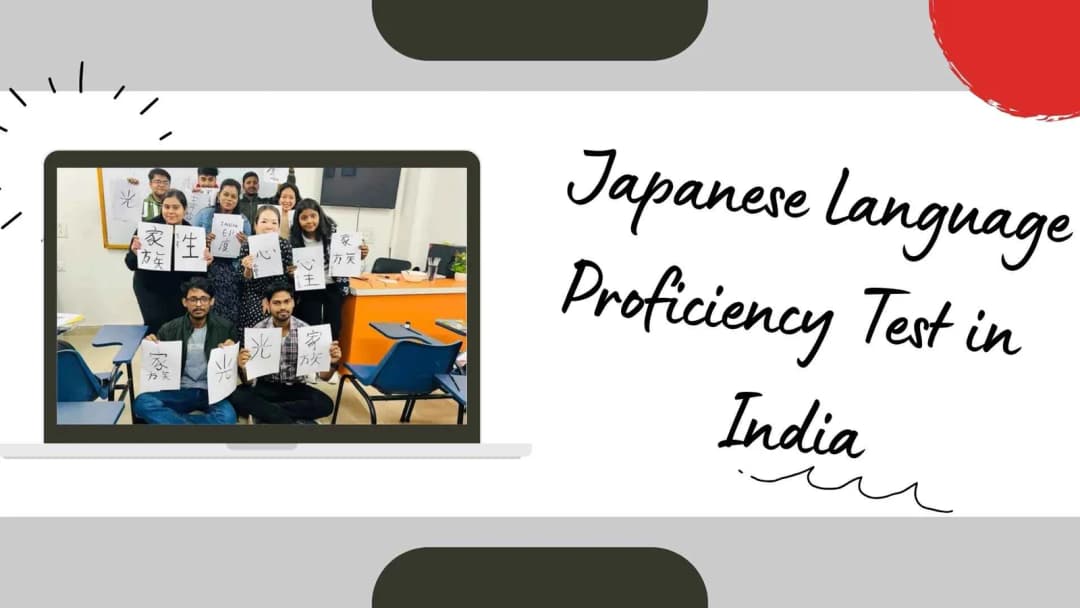
Japanese Language Proficiency Test in India – Complete Guide (Eligibility, Registration, Benefits & Preparation Tips)
Published: 2025-12-19 06:59:34
The Japanese Language Proficiency Test (JLPT) is the most recognized and trusted Japanese language certification in India and across the world. Whether you aim to study in Japan, work with Japanese companies, or build a global career, clearing the JLPT can open powerful opportunities.
In recent years, interest in the Japanese language has grown rapidly in India due to strong India–Japan relations, increasing job demand, anime & manga culture, and Japan’s skilled worker visa programs. This guide will help you understand everything about the Japanese Language Proficiency Test in India, from overview and eligibility to registration, benefits, preparation tips, FAQs, and where to get expert training.
Learn more about JLPT levels, exam dates, and preparation in our complete guide:
👉 https://www.teamlanguages.com/jlpt
Overview of Japanese Language Proficiency Test (JLPT)
The Japanese Language Proficiency Test (JLPT) is the most widely recognized and trusted certification for assessing Japanese language skills of non-native speakers worldwide. Conducted in multiple countries every year, JLPT is a key benchmark for education, employment, and immigration related to Japan.
For official updates, registration details, and global test information, candidates can refer to the MOFA / MOSAI official website (Japan’s authorized portals for international language and education programs).
JLPT Levels Explained (N5 to N1)
The JLPT is structured into five progressive levels, allowing learners to advance step by step from beginner to professional fluency.
| JLPT Level | Proficiency Level | Suitable For |
| N5 | Basic | Absolute beginners |
| N4 | Elementary | Basic daily communication |
| N3 | Intermediate | Everyday conversation & reading |
| N2 | Upper-Intermediate | Business & academic usage |
| N1 | Advanced | Near-native proficiency |
What Each Level Focuses On
- N5 & N4
Focus on fundamental grammar, basic vocabulary, simple kanji, and everyday expressions. Ideal for new learners building a strong foundation. - N3
Acts as a bridge level, testing your ability to understand spoken Japanese and written content used in daily life. This level is often considered a turning point in fluency. - N2 & N1
Designed for professional and academic mastery, these levels test complex grammar, advanced kanji, fast-paced listening, and formal Japanese used in workplaces and universities.
👉 Important Insight:
Most Japanese companies in India and Japan prefer candidates with JLPT N3 or higher, while N2/N1 significantly increases opportunities in corporate roles, higher education, and long-term career growth in Japan.
For a detailed list of JLPT exam centers across India, check out
👉 https://www.teamlanguages.com/blogs/jlpt-exam-centers-in-india
Japanese Language Proficiency Test in India – Important Details
The Japanese Language Proficiency Test (JLPT) is officially conducted in India and serves as a globally accepted certification for Japanese language skills. It is a crucial exam for students, professionals, and Japan aspirants aiming for higher education or career opportunities.
JLPT Exam Schedule in India
Conducted Twice Every Year:
- July Session
- December Session
These fixed exam windows allow candidates to plan their preparation well in advance and choose the most suitable attempt based on their readiness.
JLPT Exam Mode
- Offline examination
- Pen & paper–based test
- Strictly supervised and standardized across all test centers
JLPT Test Sections
The exam evaluates real-world Japanese language ability through three core sections:
- Language Knowledge (Vocabulary & Grammar)
Tests word usage, sentence structure, kanji, and grammatical accuracy. - Reading Comprehension
Measures your ability to understand written Japanese, including notices, articles, and contextual passages. - Listening Comprehension
Assesses understanding of spoken Japanese through conversations, instructions, and announcements.
JLPT Exam Centers in India
The Japanese Language Proficiency Test (JLPT) is conducted at selected, officially authorized centers across India to ensure uniformity, fairness, and international testing standards.
JLPT exam centers in India include major cities and academic hubs such as:
- New Delhi
- Mumbai
- Chennai
- Bengaluru
- Pune
- Kolkata
- Santiniketan
- Karur
Each exam center operates in collaboration with authorized Japanese and Indian institutions, following strict guidelines set by the Japan Foundation and JEES. This ensures consistent evaluation, secure testing environments, and globally accepted certification.
Important Note:
Seats at these centers are limited and allocated on a first-come, first-served basis, so early application is strongly advised—especially for popular levels like JLPT N3, N2, and N1.
To understand the JLPT exam pattern and question format, visit:
👉 https://www.teamlanguages.com/blogs/jlpt-exam-pattern-format
Eligibility Criteria for Japanese Language Exams
One of the biggest advantages of the Japanese Language Proficiency Test (JLPT) is its open and flexible eligibility policy. The exam is designed to encourage anyone interested in the Japanese language—regardless of age or academic background—to get certified.
Who Can Apply for JLPT?
JLPT is open to all non-native Japanese speakers, including:
✔ Students planning higher education or skill enhancement
✔ Working professionals aiming for better career opportunities
✔ Job seekers targeting Japanese or MNC companies
✔ Business owners & entrepreneurs dealing with Japanese clients
✔ Anime, manga & Japanese culture enthusiasts
✔ Study abroad & Japan aspirants
Age Limit
- No age restriction
Candidates of any age can apply and appear for the exam.
Educational Qualification
- No minimum educational qualification required
School students, college graduates, and professionals can all register without restrictions.
Level Selection Flexibility
You are allowed to apply directly for any JLPT level (N5 to N1) without appearing for lower levels.
Expert Tip:
While this flexibility exists, beginners are strongly advised to start with JLPT N5. It helps build a strong foundation in grammar, vocabulary, and sentence structure, leading to much better success rates in higher levels.
The JLPT’s inclusive eligibility makes it one of the most accessible and globally recognized language certification exams—perfect for learners at any stage of their Japanese language journey.
For step-by-step details on JLPT registration in India, visit:
👉 https://www.teamlanguages.com/jlpt/registration
How to Register for Japanese Language Test in India
Registering for the Japanese Language Proficiency Test (JLPT) in India requires careful attention, as each exam city manages its own registration portal and deadlines. Seats are limited and filled on a first-come, first-served basis, so early action is essential.
Step-by-Step JLPT Registration Process
Registering for the JLPT in India is a simple and structured process. First, candidates need to check the official JLPT website for exam dates and eligibility criteria. Next, they must fill out the online application form, providing personal details, selecting the desired JLPT level, and uploading necessary documents.
1.Check the Registration Timeline
JLPT is conducted twice a year, usually on the first Sunday of July and December.
- July Exam
Registration opens: March
Registration closes: April - December Exam
Registration opens: August
Registration closes: September
Note: Portals may close early once seat capacity is reached.
2.Choose Your Test City & Official Portal
You must register through the authorized institution website of your chosen city:
- New Delhi – MOSAI (Mombusho Scholars Association of India)
- Pune – JALTAP (Japanese Language Teachers’ Association, Pune)
- Chennai – ABK-AOTS DOSOKAI
- Bengaluru – BNK (Bangalore Nihongo Kyooshi-kai)
- Kolkata – Indo-Japan Welfare & Cultural Association (often offline registration)
- Santiniketan – Visva-Bharati University
Each center announces its own registration notice and payment process.
3.Prepare Required Documents
Before starting the application, keep these ready:
- Recent passport-size photograph (approx. 3.5 cm × 4.5 cm)
- Valid government ID (Aadhaar / Passport / PAN card)
4.Complete the Online Application
- Create an account on the selected city portal
- Choose your exam level: N5, N4, N3, N2, or N1
- Fill in personal details carefully
- Upload photo and ID proof
Exam Timing Note:
- N1 & N2 – Morning session
- N3, N4 & N5 – Afternoon session
5.Pay the Exam Fee
- Fees generally range from ₹1,000 to ₹2,000 GST, depending on level and center
- Payment modes usually include UPI, Net Banking, Debit/Credit Card
6.Download Confirmation
After successful payment:
✔ Download and save the application form
✔ Keep the application number / transaction ID safe for future use
Check your JLPT exam results and score details here:
👉 https://www.teamlanguages.com/jlpt/result
Admit Card & Result Information
- Admit Cards: Released online or sent via email 2–4 weeks before the exam
- Results:
- July exam → Late August
- December exam → Late January
(Available on the official JLPT result portal)
Important Reminder
Many candidates miss the JLPT every year because they apply late or make errors during registration.
TLS – The Japanese Language School provides complete JLPT registration assistance, helping students with:
- Correct level selection
- City-wise portal guidance
- Error-free form filling
- Deadline tracking
This ensures a smooth and stress-free registration experience.
New to Japanese? Start with our JLPT preparation guide for beginners:
👉 https://www.teamlanguages.com/blogs/jlpt-preparation-guide-for-beginners
Benefits of Passing Japanese Language Exams
Clearing the Japanese Language Proficiency Test (JLPT) is more than just earning a certificate—it’s a career-shaping milestone that opens doors to global opportunities, higher income, and cultural fluency.
1.Job Opportunities in Japan & India
JLPT certification is highly valued by employers across multiple industries:
- Japanese MNCs in India (Automobile, IT, Electronics, Manufacturing)
- Jobs in Japan under skilled worker and technical programs
- Translator & Interpreter roles for corporate and government work
- Japanese BPO & KPO positions handling Japan-based clients
Most recruiters prefer JLPT N3 or higher, with N2/N1 being ideal for corporate roles.
2.Higher Education in Japan
JLPT plays a vital role for students planning to study in Japan:
- Required for admission to Japanese universities & colleges
- Strong advantage for scholarships such as MEXT
- Often essential for student visa approval
A higher JLPT level significantly improves your academic acceptance chances.
Learn everything about the JLPT exam—levels, pattern, and benefits here:
👉 https://www.teamlanguages.com/blogs/jlpt-exam
3.Higher Salary Packages
Japanese language skills are rare and highly paid:
- Japanese language professionals earn 30%–70% higher salaries than non-certified peers
- JLPT N2 & N1 candidates receive premium salary packages and leadership roles
- Higher levels unlock faster promotions and long-term career growth
4.Work Visa & Immigration Benefits
JLPT certification directly supports Japan immigration pathways:
- Strengthens your Japan work visa profile
- Mandatory or highly preferred for the Specified Skilled Worker (SSW) visa
- Improves eligibility for long-term employment in Japan
For complete insights on the Japanese Language Proficiency Test (JLPT), visit:
👉 https://www.teamlanguages.com/blogs/jlpt
5.Cultural & Personal Growth
Beyond career benefits, JLPT enriches your personal life:
- Deep understanding of Japanese culture, etiquette, and values
- Ability to read manga, watch anime, and follow Japanese media without subtitles
- Confidence in real-life conversations and global communication skills
Final Insight
Passing JLPT doesn’t just certify your language ability—it connects you to Japan academically, professionally, and culturally. Whether your goal is a high-paying job, studying in Japan, or personal enrichment, JLPT is a powerful step forward.
Tips for Preparing for Japanese Language Proficiency Test
Cracking the Japanese Language Proficiency Test (JLPT) requires more than hard work—it needs structured preparation, smart strategies, and expert guidance. Whether you’re a beginner or aiming for advanced levels, the right approach can dramatically improve your success rate.
1.Start with the Right JLPT Level
Choosing the correct level is the foundation of success:
- Absolute beginners → Start with JLPT N5
- Learners with basics → Opt for N4 or N3 (after a proper level assessment)
Starting at the right level helps you build confidence and avoid unnecessary failure.
Planning to take the JLPT abroad? Check the overseas test centers for JLPT here:
👉 https://www.teamlanguages.com/blogs/overseas-test-centers-for-jlpt
2.Build a Strong Vocabulary Base
Vocabulary is the backbone of JLPT:
- Focus on daily-use Japanese words and expressions
- Use flashcards and spaced repetition techniques
- Revise words regularly to improve long-term retention
Consistent vocabulary practice improves reading, listening, and grammar together.
3.Master JLPT Grammar Patterns
JLPT grammar is pattern-based, not conversational guessing:
- Learn grammar structures level-wise
- Practice sentence formation daily
- Understand usage context, not just rules
Strong grammar accuracy is key to clearing higher levels like N3, N2, and N1.
For a complete overview of the JLPT syllabus for all levels, visit:
👉 https://www.teamlanguages.com/blogs/jlpt-syllabus
4.Improve Listening Skills
Listening is often the most challenging section:
- Watch Japanese news, anime, dramas, and podcasts
- Practice with JLPT-style listening mock tests
- Train your ear for speed, accent, and natural conversation flow
5.Practice Reading Every Day
Reading ability improves gradually with consistency:
- Start with short, simple passages
- Move to articles, notices, and newspapers
- Focus on understanding meaning, not translating word by word
This habit is crucial for N3 and above.
Looking for effective study strategies? Read how to study for JLPT here:
👉 https://www.teamlanguages.com/blogs/how-to-study-for-jlpt
6.Take Regular Mock Tests
Mock tests simulate real exam pressure:
- Understand the exam pattern and time limits
- Identify weak areas early
- Improve speed, accuracy, and confidence
7.Join a Professional Japanese Language Institute
While self-study is helpful, expert training makes a big difference:
- Structured curriculum
- Experienced trainers
- Regular evaluations and feedback
- Higher pass success rates
Guided learning significantly increases your chances of clearing JLPT in the first attempt.
Why Choose TLS – The Japanese Language School?
TLS – The Japanese Language School is one of the most trusted and result-oriented Japanese language institutes in Delhi NCR, known for its consistent JLPT success record and student-focused training approach. If your goal is to clear JLPT and build a strong career connected with Japan, TLS offers the right guidance at every step.
Curious about Japanese language certification options? Visit:
👉 https://www.teamlanguages.com/blogs/japanese-language-certificate
What Makes TLS Different?
✔ Experienced, JLPT-Certified Trainers
Learn from expert faculty with deep knowledge of JLPT patterns, scoring systems, and exam strategies.
✔ JLPT-Focused Curriculum (N5 to N1)
Structured, level-wise syllabus designed strictly according to the latest JLPT exam requirements.
✔ Small Batch Sizes
Personal attention ensures faster learning, doubt clearance, and better progress tracking.
✔ Regular Mock Tests & Evaluations
Exam-like practice tests to improve speed, accuracy, and confidence before the actual JLPT.
✔ Strong Speaking & Listening Practice
Special focus on real-life communication, pronunciation, and listening comprehension—often the toughest sections for students.
✔ Complete Exam Registration Guidance
From level selection to error-free application, TLS supports you throughout the JLPT registration process.
✔ Career & Visa Counseling
Guidance for jobs in Japanese companies, higher education in Japan, and work visa pathways such as SSW.
Proven Track Record of Success
Thousands of students trained at TLS – The Japanese Language School have successfully cleared JLPT N5, N4, N3, and N2, and are now pursuing careers in Japan and India across industries like IT, automobiles, translation, and education.
Ready to start your Japanese language journey? Visit the admission page:
👉 https://www.teamlanguages.com/admission
Enroll Now at TLS – The Japanese Language School
Visit Us
TLS – The Japanese Language School
2/81–82, 2nd Floor,
Lalita Park, Gali No – 2,
Laxmi Nagar,
New Delhi – 110092
Call Us
91 8700956038
Email Us
tls@teamlanguages.com
Book a Free Counseling Session Today!
Start your journey toward JLPT success with expert mentors.
Have questions about JLPT courses? Contact us here:
👉 https://www.teamlanguages.com/contact-us
Frequently Asked Questions (FAQs)
Q1. What is the Japanese Language Proficiency Test (JLPT)?
The Japanese Language Proficiency Test (JLPT) is an internationally recognized certification exam that evaluates the Japanese language skills of non-native speakers. It is accepted worldwide for education, employment, and visa purposes and is jointly conducted by the Japan Foundation and JEES.
Q2. How many times is JLPT conducted in India?
JLPT is conducted twice every year in India:
- July
- December
These fixed schedules allow candidates to plan their preparation in advance.
Q3. Can beginners apply for JLPT?
Yes, absolutely. Beginners can directly apply for JLPT. It is strongly recommended that first-time learners start with JLPT N5, which focuses on basic grammar, vocabulary, and everyday expressions.
Q4. Is JLPT valid for jobs in Japan?
Yes. JLPT is widely accepted by Japanese employers in both Japan and India.
- JLPT N3, N2, and N1 are especially valued for professional roles, corporate jobs, and skilled worker programs.
Q5. Which JLPT level is best for jobs?
The ideal JLPT level depends on your career goals:
- JLPT N3 – Entry-level jobs, junior roles, BPO/KPO positions
- JLPT N2 – Professional, corporate, and technical jobs
- JLPT N1 – Advanced roles, managerial positions, translation, and academic careers
Higher levels lead to better salary packages and growth opportunities.
Q6. How long does it take to prepare for JLPT N5?
With proper guidance and regular practice, most students can prepare for JLPT N5 in 4–6 months. A structured study plan significantly improves first-attempt success.
Q7. Does TLS help with JLPT registration?
Yes. TLS – The Japanese Language School provides complete JLPT registration support, including:
- Level selection guidance
- City-wise portal assistance
- Error-free application filling
- Deadline reminders
Q8. Is JLPT compulsory for studying in Japan?
While not mandatory for all programs, JLPT significantly improves admission chances for Japanese universities and is often required for scholarships like MEXT and student visas.
Q9. What is the minimum JLPT level required for a Japan work visa?
For most work and skill-based visas, JLPT N3 or higher is preferred. Certain programs like the Specified Skilled Worker (SSW) visa may require JLPT certification.
Q10. Can I directly appear for higher levels like N2 or N1?
Yes. JLPT allows candidates to apply directly for any level without clearing lower levels first. However, beginners are advised to progress step by step for better results.
If you are serious about learning Japanese and clearing the Japanese Language Proficiency Test in India, don’t rely on random resources.
Join TLS – The Japanese Language School today
✔ Expert trainers
✔ JLPT-focused preparation
✔ Proven success record
Call Now: 91 8700956038
Visit TLS in Laxmi Nagar, Delhi
Your Japanese language journey starts here!